
Wireless signal transmission via Bluetooth is convenient. For example, music can be streamed from a smartphone or television to wireless headphones. The bandwidth of Bluetooth was originally very limited. Since the Bluetooth standard is backward compatible, this limitation must be taken into account despite new possibilities. The audio signal is always compressed for transmission and reassembled at the receiver. It quickly becomes clear that this doesn't improve the sound quality. Bluetooth audio transmission is based on the A2DP profile (Advanced Audio Distribution Profile) and the SBC codec (Low Complexity Subband Codec). This is the common denominator of all Bluetooth audio devices. This method has low hardware requirements, and the music quality is acceptable. However, the conversion process introduces delays between the audio source and receiver. For example, if television sound is played back on a TV and Bluetooth speakers, a noticeable echo is the result. This so-called latency cannot be completely eliminated, but it can be reduced depending on the codec used.
aptX
aptX is a special codec that allows for a higher data rate of up to 384 kbps and improved audio quality. The technology was originally developed for digital telephony and later further refined for professional audio transmission. When the signal source and receiver are connected via Bluetooth and both support aptX, a significant improvement in quality results. Many smartphones and tablets, as well as the Windows 10/11 and Mac OS X operating systems, support aptX. However, iPhones and iPads do not.
aptX Low Latency
aptX Low Latency is an advanced version of the standard aptX codec and is used when both the sender and receiver support this codec. The audio quality is roughly the same as with aptX. The data rate is 352 kbps. The additional advantage lies in the low latency. Latency refers to the delay caused by the transmission. It takes a few milliseconds before you hear the sound from the sender. If there are speakers at both the sender and receiver, this is perceived as a reverberation or echo. aptX Low Latency limits the latency to about 40 ms , which is also the value recommended for audio-video applications. With conventional transmission using the SBC codec, the typical latency is 200 ms. When audio is transmitted via Bluetooth using SBC, it is not lip-synced to the television picture. It is also irritating in computer games when the game sounds are transmitted with a delay. Therefore, aptX Low Latency is ideally suited for time-critical applications such as video, gaming, and (to a limited extent) music making. If you want to use Bluetooth, you should check if both devices support the aptX LL standard.
aptX is a technology from Qualcomm (formerly known as CSR). aptX Low Latency is difficult to use in wireless in-ear headphones and smartphones because it requires an additional antenna. Therefore, the technology is mostly found in over-ear headphones and separate audio transmitters.
aptX HD
This standard delivers even better audio quality with a data rate of up to 576 kbps. The latency is relatively high at 200 ms . Therefore, its typical application is music transmission, where a time delay is not a concern.
aptX adaptive
For several years now, the aptX Adaptive codec has been gaining popularity, automatically adjusting its bitrate to the transmission conditions and the specific use case. This reduces dropouts and ensures a stable connection, especially with a weak signal. Despite its variable bitrate (279–420 kbps), aptX Adaptive offers similar or better sound quality than aptX HD. aptX Adaptive also features a mode for video and gaming, which offers lower latency than standard aptX. The codec is backward compatible with aptX and aptX HD, allowing continued use with older devices. On smartphones and tablets with Qualcomm or Snapdragon chips (almost all Android phones), the mode can be dynamically adjusted automatically. On separate audio transmitters, manual mode selection is possible, allowing users to prioritize either the lowest latency or the highest audio quality. The latency in low-latency mode is a very good 50 to 80 ms , depending on the device combination and headphone technology.
LC3 is a codec that has been in use since the end of 2024, and which primarily benefits hearing aids and Auracast applications.
Bluetooth Audio Codecs Overview
| Codec | Typical latency (ms) | Audio quality (bitrate/bit depth) | Notes |
|---|---|---|---|
| SBC | 100–300 | 328 kbit/s, 16 bit/44.1 kHz | Standard, mediocre quality |
| LC3 | 50–100 | Up to 345 kbit/s, 16-24 bit/48 kHz | New, efficient, good quality |
| aptX | ~150 | 352 kbit/s, 16 bit/44.1 kHz | Better than SBC, CD quality |
| aptX HD | ~200 | 576 kbit/s, 24 bit/48 kHz | Hi-Res, better detail |
| aptX LL | ~40 | 352 kbit/s, 16 bit/44.1 kHz | Low latency, CD quality |
| aptX Adaptive | 50–100 | 279-420 kbit/s, 16-24 bit/44.1-96 kHz | Dynamic, Hi-Res capable |
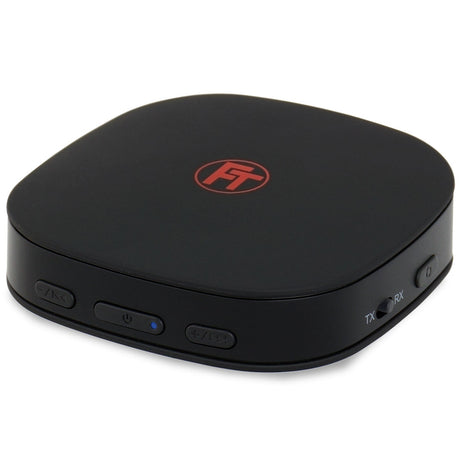
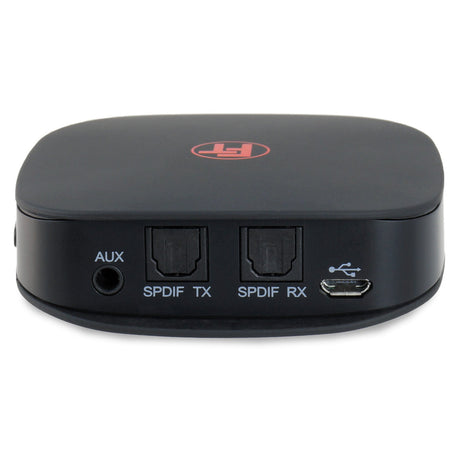
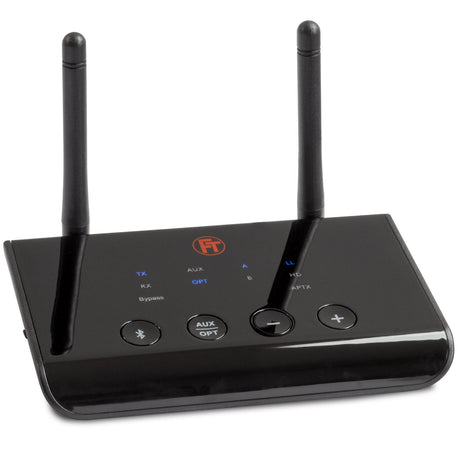
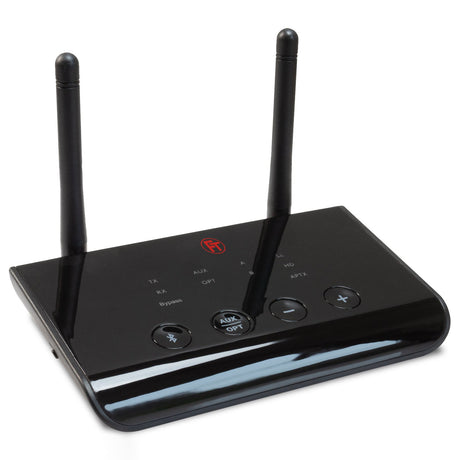
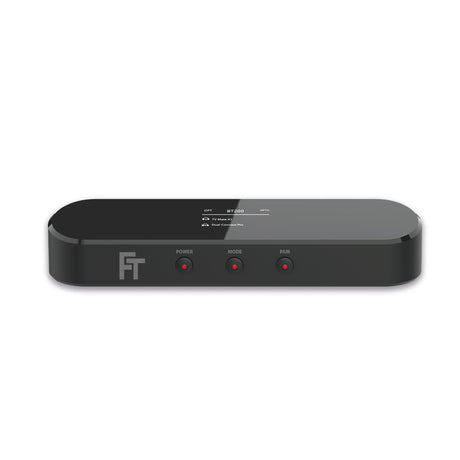
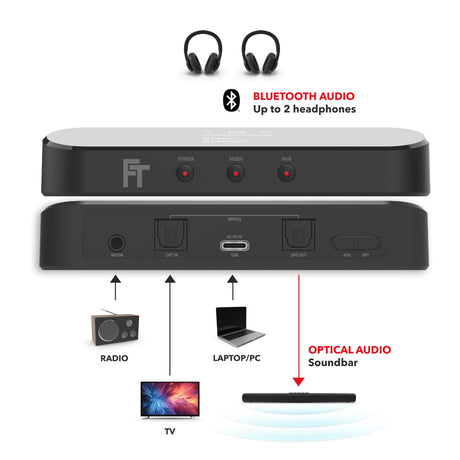
AptX Low Latency has been discontinued, and therefore no new headphone models will be released with this technology. Those already using a compatible device combination will be able to continue using it in the future. Anyone looking to buy headphones now will find a much wider selection of models with aptX Adaptive, such as the latest Teufel Pro series headphones. Our BT200 would be the ideal audio transmitter for such new headphones.